
Technology consulting and integration
FREESupports infrastructure planning and integration across cabling, networks, security, AV, and related systems.
This page explains the service, the business challenges it is designed to address, and practical ways eligible members may use it. Availability and any project-specific terms are confirmed with AsOneForce.
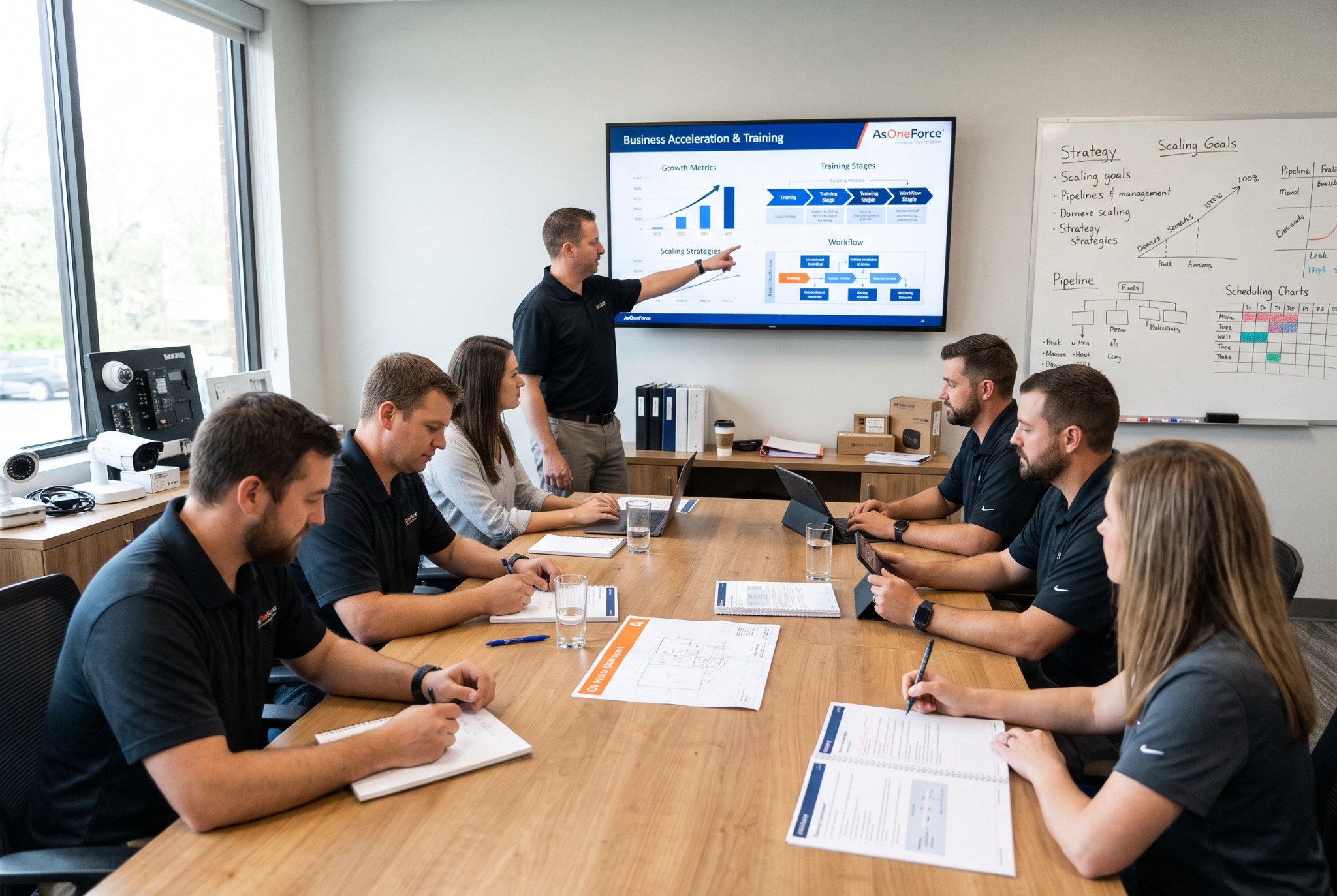
Top 10 problems this offering helps solve
Review each challenge alongside why it matters and how this offering may help address it.
| # | Problem | Why it matters | How the offering helps |
|---|---|---|---|
| 1 | Technology needs are spread across disconnected vendors | Separate scopes can create gaps and overlapping responsibilities. | Consulting and integration help define requirements, coordinate relevant technology scopes, plan deployment, and document the resulting environment. Improves scope clarity and coordination across technology and field work. |
| 2 | Existing infrastructure is not fully documented | Unknown conditions increase project uncertainty. | Consulting and integration help define requirements, coordinate relevant technology scopes, plan deployment, and document the resulting environment. Improves scope clarity and coordination across technology and field work. |
| 3 | Business requirements are not translated into a buildable design | A buildable plan needs to connect desired outcomes to technical choices. | Consulting and integration help define requirements, coordinate relevant technology scopes, plan deployment, and document the resulting environment. Improves scope clarity and coordination across technology and field work. |
| 4 | Systems from different vendors do not work together as planned | Integration requirements should be resolved before field deployment. | Consulting and integration help define requirements, coordinate relevant technology scopes, plan deployment, and document the resulting environment. Improves scope clarity and coordination across technology and field work. |
| 5 | Budget and scope assumptions change late | Early assumptions can shift as scope becomes clearer. | Consulting and integration help define requirements, coordinate relevant technology scopes, plan deployment, and document the resulting environment. Improves scope clarity and coordination across technology and field work. |
| 6 | Installation disrupts normal business operations | Work needs to fit site operations and access windows. | Consulting and integration help define requirements, coordinate relevant technology scopes, plan deployment, and document the resulting environment. Improves scope clarity and coordination across technology and field work. |
| 7 | Project decisions lack a clear accountable coordinator | Missing information creates estimating, coordination, or delivery risk. | Consulting and integration help define requirements, coordinate relevant technology scopes, plan deployment, and document the resulting environment. Improves scope clarity and coordination across technology and field work. |
| 8 | As-built and configuration records are incomplete | Accurate closeout information supports support and future changes. | Consulting and integration help define requirements, coordinate relevant technology scopes, plan deployment, and document the resulting environment. Improves scope clarity and coordination across technology and field work. |
| 9 | Multi-location execution varies by local provider | Local execution needs a shared standard and documentation. | Consulting and integration help define requirements, coordinate relevant technology scopes, plan deployment, and document the resulting environment. Improves scope clarity and coordination across technology and field work. |
| 10 | Maintenance and future expansion are not planned | Lifecycle requirements influence design and total operating effort. | Consulting and integration help define requirements, coordinate relevant technology scopes, plan deployment, and document the resulting environment. Improves scope clarity and coordination across technology and field work. |
Frequently asked questions
Answers about eligibility, use, and service expectations.
When should I bring in a technology consultant?
A consultant can help when you are defining requirements, planning an upgrade, comparing systems, or coordinating several technology vendors. Early review can clarify dependencies, site constraints, and decision points before a project is scoped. The engagement and deliverables are agreed for each project. Consultants can help compare requirements and implementation options. Review existing equipment, networks, applications, and support arrangements. Define decisions and deliverables before beginning the engagement.
What happens during technology discovery?
Discovery gathers business goals, current systems, site conditions, security and network requirements, vendor dependencies, and operational constraints. The consultant then documents assumptions and open questions for design and planning. Include the people who own, operate, and support the systems. Include technical owners, field staff, operations, and customer stakeholders. Document current systems, site conditions, and security requirements. Identify dependencies, risks, assumptions, and unanswered questions.
Can existing systems be integrated with new technology?
Existing systems may be integrated with new technology when interfaces, versions, security controls, and vendor support allow it. Review data flows, interoperability, access, and failure handling before choosing a design. Feasibility and cost depend on the specific products and customer environment. Check supported interfaces, software versions, vendor permissions, and security controls. Plan how data and events move between systems. Confirm compatibility and support responsibilities with the relevant vendors.
How do teams reduce risk before a full deployment?
Document requirements, validate the design, test representative workflows, and agree on a deployment and rollback plan. For multi-system projects, coordinate vendor responsibilities, access windows, and support contacts. Testing reduces uncertainty but does not eliminate all project risk. Use a controlled test or pilot where project risk justifies it. Document acceptance criteria, rollback steps, and escalation contacts. Train the people who will operate and support the deployed system.
Does consulting include installation and ongoing support?
The scope may include assessment, design, vendor coordination, integration, deployment, or handoff, depending on the agreement. Confirm who supplies equipment, performs installation, approves changes, and provides ongoing support. Third-party products, licenses, travel, and other project costs are agreed separately. State which tasks cover consulting, installation, integration, and handoff. Name the party responsible for products, licensing, approvals, and ongoing support. Confirm scope, compensation, and third-party expenses in the project agreement.
See how this fits your business
Tell us about your company, service area, capabilities, and goals. AsOneForce can discuss eligibility and the next steps for this offering.
Join AsOneForce →